Are you looking to set up a new social intelligence capability from scratch? Or perhaps you already have a team of social intelligence researchers, and it's time for a review? Either way, you're in the right place. With over 15 years of experience in this field, I'm here to guide you through the process of building a successful social intelligence team.
💡 Who is this for?
This guide is perfect for those who are setting up a new social intelligence capability. It's never too late to build a team whose role is to surface and deliver the insights you need to make or support data-driven decisions. This guide is also great if you already have a team of social intelligence researchers and it's time for a review.
Starting the Social Intelligence Capability
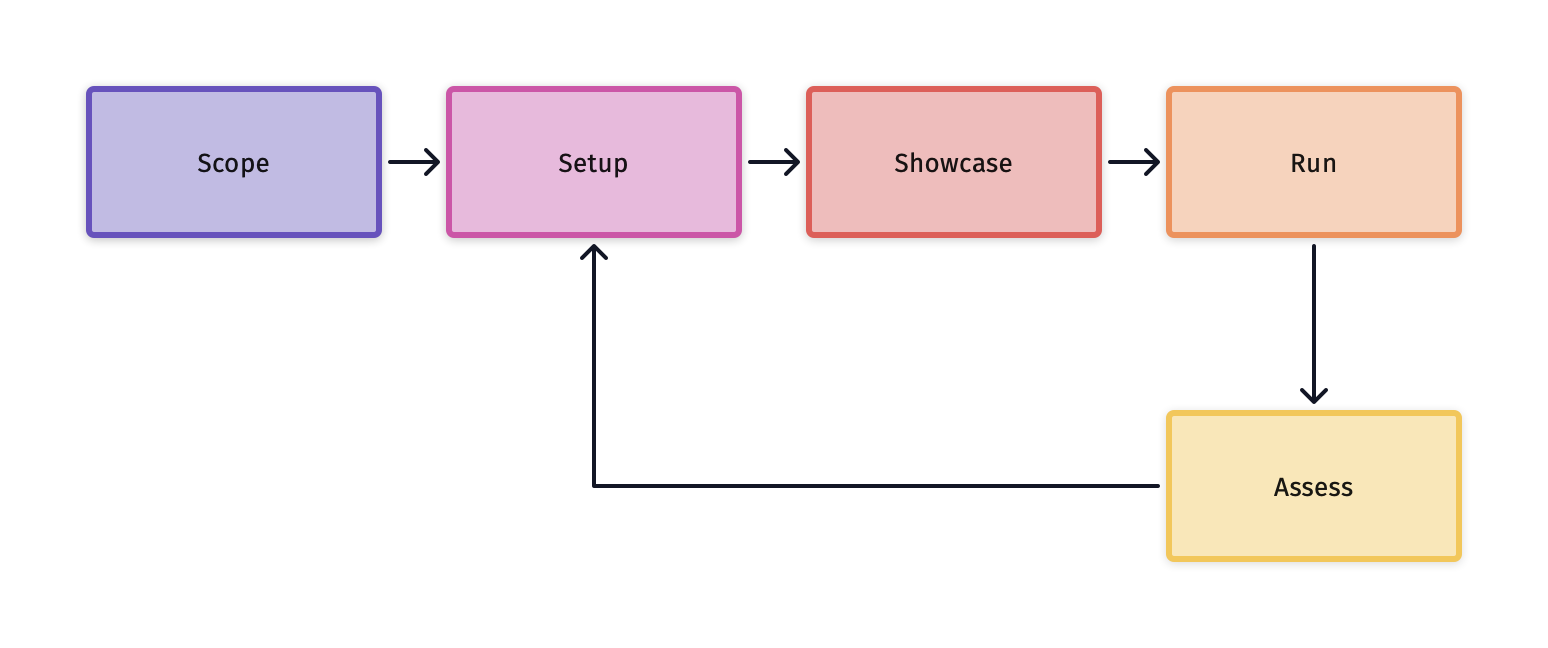
Setting up a social intelligence capability involves five stages: Scope, Setup, Showcase, Run, and Assess. These stages are not linear but recursive, meaning they loop back on themselves as you refine and improve your capability over time.
Scope & Setup
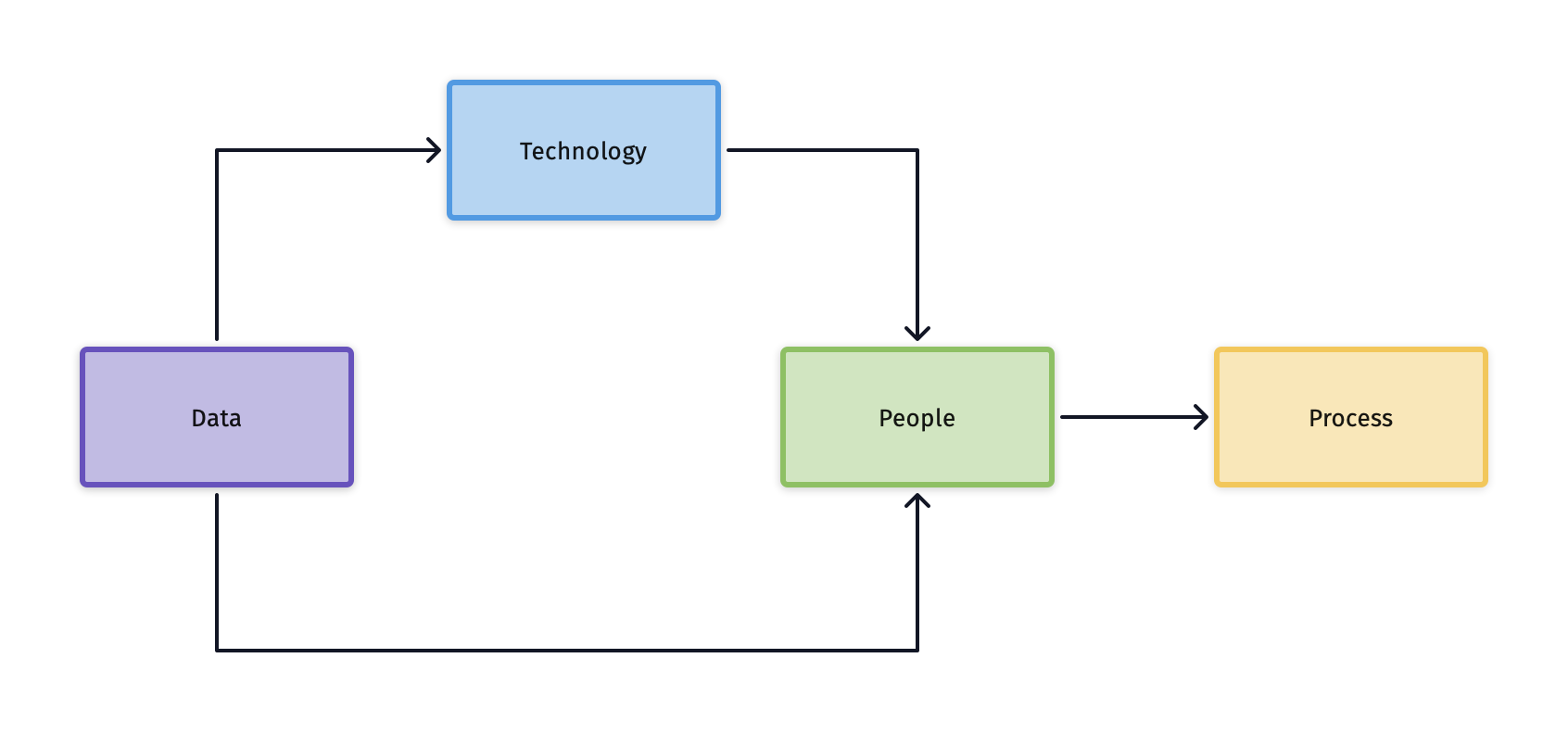
The first stage is to lay the foundation for a successful and innovative social intelligence team. This involves getting the right people, the right tech, and the right data, and tying these three together with the right processes.
The Data: The What
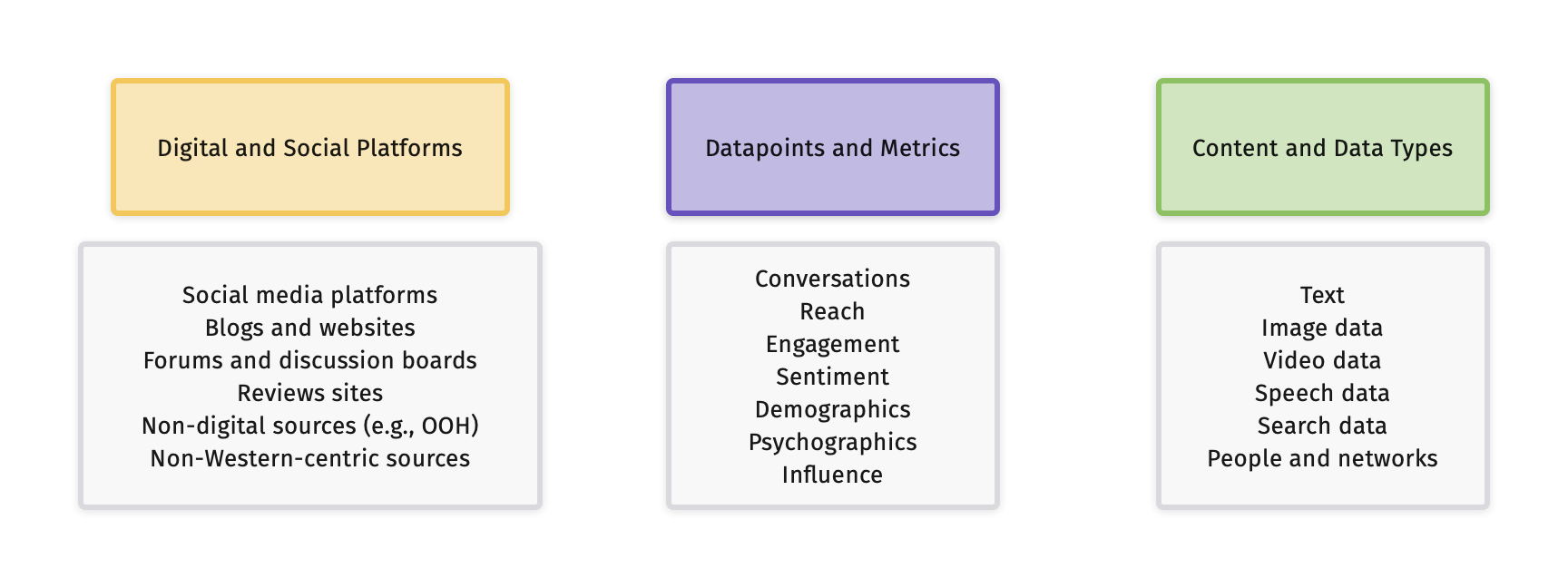
What data will you need to track? What data is already available? What data should this team cover?
These are a few questions you'll need to consider as you embark on this journey. If you're not sure where to start, start with your business objectives:
- What are you trying to achieve?
- Who is your target audience?
- What platforms do they use?
- What kind of content do they engage with?
The answers to these questions will guide you in determining which platforms and what data to track.
Start by tracking basic metrics such as reach, engagement, and sentiment and emotion analysis on the platforms your target audience uses. As you become more comfortable with data collection and analysis, you can start to delve deeper into more complex metrics such as influence (e.g., network analysis), demographics, and psychographics.
When it comes to data collection and analysis, start small and scale up. Market research and social intelligence provider Nichefire says it best: more data does not equal better decisions. Begin with a few key metrics and gradually add more as your team gains experience and your tools become more sophisticated. Use tools that can automate data collection and provide easy-to-understand analytics dashboards. This will allow your team to spend less time on data collection and more time on analysis and insight generation.
The People: The Who
Start thinking about the who after you've identified the what and while you're evaluating the technology. If you're not sure about the best ways to set this team up, start with a social intelligence lead, who can take care of this process.
There are two things to bear in mind as part of this step:
- There are mainly four roles you'll need as part of your capability. These four roles don't have to be four separate people–they can be disciplines and skills shared across the team, and they can also be skills leveraged from other teams internally (e.g. if you already have a team of data scientists or a team of designers who are skilled with data stories);
- Secondly, these roles don't have to be one of one: having worked in data analytics and social intelligence for over 15 years, I know too well of teams with a singular person carrying multiple social intelligence hats. I was one myself in many of my past roles. The size of your social intelligence capability should reflect the needs and demands of your business, so it should be directly proportional.
The roles are:
- Social Intelligence Lead: this can be a director, a manager, or an interim consultant. This person's initial responsibility is to set up, lead, and develop your new social intelligence capability. They're responsible for integrating social intelligence across the business, thus taking requirements from various departments to best assess how social intelligence can support and elevate what these teams do.
- Social Analyst: this analyst and researcher is responsible for managing and analysing data, and executing research projects. As part of their progression into a senior social analyst, their role will evolve to a consultative one, with the responsibility to provide advice and support to social intelligence stakeholders, keeping the research threads going.
- Data Scientist: this role is responsible for the analysis and interpretation of complex data. Ideally, they'll be familiar with Python, R, and SQL, depending on the depth of analysis required. This is a clear example of a role that can also be a shared discipline in this team: the social analyst may already have experience with practices like using SQL to clean vast amounts of data–that can definitely come in handy for your team.
- Research Visualisation Designer: this isn't a vanity role, but rather a role that understands that how you tell a story is just as important as what's in a story, and a data story poorly designed can often distract a stakeholder from understanding the "so what?"–what's in it for them, what does this mean for them, what should they do with this. This person will carefully craft and use the right visualisation and right medium to connect a curious stakeholder to the complex datasets that this team will be working with.
Here's an ideal team structure: a social intelligence lead, and two analysts–one who has competency in data science (ideally with knowledge of Python, R, SQL, and how to use APIs), and one who has competency in visualisation design (ideally with tools like Tableau, Power BI, or Looker Studio).
The Technology: The Where
In this phase, you need to answer these questions:
- What technology infrastructure is needed to support the kinds of reporting you want to do?
- What’s already in use that can be leveraged? For instance, if you already have a tool like Hootsuite or Sprinklr for community management, you can start using it for social monitoring and, eventually, social listening.
- What do we have access to, that you could make more use of? Ideally, these tools need to be able to integrate with each other, to be able to tell richer and more comprehensive data stories.
- Based on what we know about our customers and leads (i.e., the answers to the questions in "The Data - The What"), what’s missing?
For a social intelligence capability, you need solutions that cover four main aspects:
- Social analytics, looking at the performance of social accounts; it can add valuable context to social intelligence research;
- Social audience intelligence, to answer questions like, "who are the people behind the conversations? What networks do they belong to, and how do these networks (communities/subcommunities) communicate and influence each other? How do these networks react to media and content differently?";
- Social listening, to answer questions like, "what are these people sharing? What can we tell from their opinions, their habits, the content of their discussions?";
- Search and content research: a lot of what we share isn't text or media, but behaviour; not just engagement, which morphs social algorithms to offer more of what we like, but search. Search data gives necessary context to what's going on, especially for sensitive topics that we're less likely to discuss openly online unless anonymous.
The Processes: The How and The Why
You have people at the foundation of the team, the data you need for social intelligence, and the tech needed to make that happen. What ties these three together is the right set of processes, i.e., how should the people use technology to make the most of the data we have? All processes lead to the primary business mission and vision — so instead of social intelligence being an additional service, it needs to be seen as a complimentary research unit that integrates with other units.
These are a few key processes that are essential to the team’s effectiveness and efficiency:
- Goal and objective setting, aligned with the overall business objectives. This will provide clarity on how the team’s achievements contribute to the success of your business;
- Project intake and prioritisation, evaluating project requests and prioritising them based on strategic importance, potential impact, and available resources;
- Data collection and management, establishing a systematic approach to collecting data from various social media platforms and tools. This could involves using social listening tools, APIs, or manual data collection methods, while complying with data protection regulations (e.g., GDPR);
- Social intelligence methodologies, including frameworks that outline best practices to follow in conducting data analysis and generating insights (e.g., data cleaning, visualisation approaches);
- Continuous learning and skill development, providing opportunities for training (The Social Intelligence Lab is the perfect place to start, if you're looking to develop further as a social intelligence researcher);
- Team collaboration, establishing channels for access and effective collaboration;
- Performance measurement and evaluation, defining KPIs for team performance, and monitoring progress towards goals.
Showcasing Social Intelligence - Inside and Out
Once the scope is sorted, and setup is complete, social intelligence research can be showcased internally (and externally too, if you have external clients that may benefit from social intelligence). This is not only to signal the availability of this capability, but also to show “the art of the possible” – what can be researched with social intelligence, and the possible results.
As part of your showcase (or "social intelligence roadshow", or however you want to call it), think about how you're going to elevate the profile of social intelligence, giving everyone at your business proof of value, while helping your team become familiar with the types of projects they will encounter, becoming familiar with tools, methodologies, types of research, and what data and analysis is needed based on the nature of the question.
Where can you start? You can use social intelligence to aid your internal efforts around sales, product development, training and development, strategy, marketing and advertising, brand monitoring, content strategy, event planning, etc. Having worked with so many types of teams and departments, B2B and B2C, let me assure you of this: every department in a business could benefit from insights from social intelligence and social listening data, so long as you can show that tangible proof of value that social intelligence can give them.
Here are a few examples:
- Marketing: marketers can use social intelligence to understand what content resonates with their audience, track the performance of their campaigns, monitor brand sentiment in reaction to their posts, and identify influencers in their industry;
- Sales: sales teams can use social intelligence to identify leads, monitor competitors, and understand customer pain points to make sure that you can truly empathise with your prospect's worries, concerns, and needs;
- Product Development: product teams can use social intelligence to gather feedback on their products, identify potential new features, and understand customer needs and preferences.
- Customer Service: customer service teams can use social intelligence to proactively identify and resolve customer issues, monitor customer sentiment, and improve their service based on unsolicited customer feedback;
- Human Resources: HR can use social intelligence to monitor employee sentiment, identify potential issues, and improve their employer brand.
Running your Social Intelligence Capability
Now that you've scoped your needs, set up your team and tools, and showcased the potential of social intelligence, it's time to run your capability. This is where the rubber meets the road, and your planning and preparation start to pay off.
Running a social intelligence capability is about continually seeking opportunities to innovate, improve, and add value to your business. It's about staying ahead of the curve in a rapidly changing digital landscape, and ensuring your team has the skills, tools, and support they need to deliver insightful, impactful research.
Running a social intelligence capability also involves managing relationships with stakeholders across your business. It's about ensuring that the insights your team generates are not just interesting, but actionable – that they're tied to business objectives, and that they're delivered in a way (visually and strategically) that enables decision-makers to use them effectively.
Here are a few steps to guide you:
- Start small: begin with a few key metrics and a limited number of platforms. As you gain experience and confidence, you can gradually expand your scope;
- Set clear goals: having clear goals will help you stay focused and measure your progress. These goals should be aligned with your overall business objectives;
- Communicate regularly with stakeholders: regular communication with stakeholders will help you understand their needs and expectations, and ensure that your social intelligence capability is delivering value;
- Invest in training: social intelligence is a rapidly evolving field. Regular training will ensure that your team stays up-to-date with the latest tools and techniques;
- Celebrate successes: celebrating successes, no matter how small, will help keep your team motivated and committed to the success of your social intelligence capability.
Assessing your Social Intelligence Capability
Just like any tool you rely on, you'll need to regularly review and optimise your social intelligence capability for maintenance. This is because three things may evolve over time:
- the social landscape: new platforms coming up, sources you'll need access to, changes in your access to these platforms and their data, consumer behaviour shifting on these platforms),
- the tech landscape: tools and solutions available, what they can offer, what offerings are being taken away, what new offerings are available,
- your business landscape: what new demands are coming up, what new teams are needing social insights, how will you scale your team and tools to meet that demand, what changes is your business going through that social intelligence can support.
This process should be ongoing, but a formal review should take place at least every 3-6 months. Here's how to approach it:
- Review of goals and objectives: revisit the goals and objectives you set when you first established your social intelligence capability. Are you meeting these goals? If not, why not? This can help you identify any gaps or areas for improvement;
- Metrics evaluation: look at the key metrics (KPIs) you've been tracking. These could include metrics like the number of reports produced, the number of insights generated, the impact of these insights on decision-making, and the satisfaction of internal stakeholders. Are these metrics showing positive results? If not, you may need to adjust your approach. Are you having difficulties answering these questions? If so, you may need to set up a formal process to monitor how your social insights are impacting your stakeholders;
- Feedback: feedback from the users of your social intelligence - whether they're internal stakeholders or external clients - is invaluable. Conduct surveys or interviews to understand their perspective. Are they finding the insights useful? What could you do better?
- Assessment of tools and processes: review the tools and processes you're using. Are they still the best fit for your needs? With the rapid pace of technological advancement, there may be new tools available that could improve your efficiency or effectiveness;
- Team's skills and training: as social intelligence evolves, so too should the skills of your team. Regularly assess whether your team has the necessary skills to effectively use the tools and analyse the data. This could involve conducting skills assessments or providing opportunities for feedback;
- Benchmark against industry standards: compare your social intelligence capability against industry standards or competitors. This can provide a useful external perspective and may highlight areas where you're ahead or behind. You can leverage platforms like G2 or TrustRadius for these benchmarks;
- Future planning: based on your assessment, make a plan for the future. This could involve setting new goals, investing in new tools, providing further training for your team, or adjusting your processes.
The goal of this assessment is to identify opportunities for improvement. It's about ensuring that your social intelligence capability continues to add value to your business and stays aligned with your business goals.
Regular assessment allows you to stay agile and responsive to these changes. It helps you to ensure that your social intelligence capability remains relevant, effective, and aligned with your business needs. It also provides an opportunity to celebrate successes, learn from challenges, and continually improve your processes and practices.
Setting up a social intelligence capability from scratch might seem like a daunting task, but with the right approach, it's entirely achievable. By following the stages of Scope, Setup, Showcase, Run, and Assess, you can build a team that not only delivers valuable insights but also contributes to the strategic goals of your business. It's never too late to start, and the benefits of having a social intelligence capability can be significant.
As always, if you have any questions on any of this, don't hesitate to reach out!